Now this is just lovely: the Rattling Books podcast of my story, The Weatherboy, as read by Gerard Whelan. I know, it's bad manners to say something I wrote myself is lovely, but it's actually Whelan's delicate reading of the story that I'm in love with. It makes me so happy to hear the story doing things I hadn't quite thought of, yet are perfect for it anyway.
This story originally appeared in echolocation 7, and I'm so pleased it's getting another life.
RR
Showing posts with label short stories. Show all posts
Showing posts with label short stories. Show all posts
Friday, March 19, 2010

Wednesday, March 17, 2010
Collectors' Items
I am so pleased to announce that my very first chapbook, Road Trips is forthcoming with Frog Hollow Press. It'll be out in May--maybe in time for my birthday! The book consists of two stories, "From an Eastern University" and "The Least of Love", and I am very honoured to have them published in what will no doubt be a beautiful edition, as all FHP publications are. So exciting! If you too are very very excited, you can preorder from the title link above!
An open secret around here is that I have written a great many stories about a character named Isobel, and even thought I was writing a collection about her at one point, although that has not worked out too well (*yet*--I'm certainly not done trying). Anyway, "The Least of Love" is one of those stories. Quite often, people get excited when I tell them certain stories of mine are connected, but other times I explain the connections and they don't care at all--a story begins on the first page and ends on the last for them, and that's that. For the sake of those in the first category (if any) I thought I'd list the (published) Isobel stories here--then you can feel free to ignore and read the stories as standalones, or to track them all down and read in order. Or not to read them at all, that's totally an option too.
These are in the order they happen chronologically in time for the characters, not the order they were written or published in. Places you can find them are beside the titles, should you care to do so.
"Dykadelic"--forthcoming in *The Milan Review" (May 2010)
"Fruit Factory"--*The New Quarterly* 102 Summer 2007; *Best Canadian Stories 2008* Oberon Press; *Once* Biblioasis 2008
"ContEd"--*Coming Attractions 2008* Oberon Press; *Once*; *The Fiddlehead* Summer 2009
"Christmas with My Mother"--*Earlit Shorts 4* Rattling Books December 2009; *Best Canadian Stories 2009*
"Far from Downtown"--forthcoming in *The New Quarterly* summer 2010
"The Least of Love"--forthcoming in *Road Trips* from Frog Hollow Press
So now you know, if you collect these stories, where you can collect them from, including a book that is itself going to be a beautiful collectors' item.
If you, you know, dig that sort of thing.
RR
An open secret around here is that I have written a great many stories about a character named Isobel, and even thought I was writing a collection about her at one point, although that has not worked out too well (*yet*--I'm certainly not done trying). Anyway, "The Least of Love" is one of those stories. Quite often, people get excited when I tell them certain stories of mine are connected, but other times I explain the connections and they don't care at all--a story begins on the first page and ends on the last for them, and that's that. For the sake of those in the first category (if any) I thought I'd list the (published) Isobel stories here--then you can feel free to ignore and read the stories as standalones, or to track them all down and read in order. Or not to read them at all, that's totally an option too.
These are in the order they happen chronologically in time for the characters, not the order they were written or published in. Places you can find them are beside the titles, should you care to do so.
"Dykadelic"--forthcoming in *The Milan Review" (May 2010)
"Fruit Factory"--*The New Quarterly* 102 Summer 2007; *Best Canadian Stories 2008* Oberon Press; *Once* Biblioasis 2008
"ContEd"--*Coming Attractions 2008* Oberon Press; *Once*; *The Fiddlehead* Summer 2009
"Christmas with My Mother"--*Earlit Shorts 4* Rattling Books December 2009; *Best Canadian Stories 2009*
"Far from Downtown"--forthcoming in *The New Quarterly* summer 2010
"The Least of Love"--forthcoming in *Road Trips* from Frog Hollow Press
So now you know, if you collect these stories, where you can collect them from, including a book that is itself going to be a beautiful collectors' item.
If you, you know, dig that sort of thing.
RR
Wednesday, February 17, 2010
Rose-coloured reviews *The Lizard* by Michael Bryson
Do you miss The Danforth Review, that awesome online literary quarterly that published such a wide range of fiction, criticism and interviews? Yeah, I miss it too, but it's cool to know that (one of) the reason(s) it is currently on hiatus is is in favour of founding publisher and editor Michael Bryson's "struggling attempts at creating literature."
I just finished reading Bryson's third book, a collection of short stories called The Lizard and I think it's worth the struggle. This is a small spare book, 117 pages of generously leaded pages, and spare also in terms of details. One of the ways I think of the short story is as a bright spotlight, trained on the ground. A character approaches it in darkness, then when s/he enters it, is brilliantly illuminated for the time it takes to cross the spotlight, then returns to darkness. The shape of the story is how and where the author trains the spotlight; the character(s)'s actual actions and dialogue just life going forward.
I think the best stories in this collection are the ones that remind me of expertly focussed spotlights. From a man whose relationship is probably disintegrating while his father's love life takes off ("May the Road Rise"--great title) to a guy who sees his childhood friend resorting to violence (maybe) ("Hit"), there aren't a lot of resolutions here, or many answers.
If you are familiar with the term tolerance for ambiguity, you probably learned it in a psychology or education class, but a reader of my acquaintance uses it to describe a reading style. Readers with a high tolerance for ambiguity don't mind not having much backstory in a piece of fiction, provided we have some sense that there is a logical one. In a good story, we're fine with not knowing why things happened, nor what the outcome is--if the author can shape the piece so that it works without those things.
"Six Million Million Miles" was, to me, the perfect story for the ambiguously tolerant (like me), because Bryson counters the randomness of writing any story about a few moments in anyone's life with how random anyone's life actually is. This story is only a couple guys sitting around, talking. They're both around forty, both in relationships that are uncertain, talking about a going into business together as soon as they can decide what that business should be. Then a house down the street explodes.
They worry about it, talk about it, watch the flames shooting into the sky. Then they go back inside because one of the guys' sort of girlfriends has arrived. She has brought someone with her--a date? The evening progresses, the other guy's girlfriend comes over too, there's another explosion, they order some pizza.
What a terrible summary! But this is a beautiful story, so much more as a whole than as the sum of it's parts--I noticed that, reading it over in bits and pieces just now to write this review. The story works because it feels random, just a bunch of stuff that happened over a few hours, but the end I was left with a powerful feeling of how anyone's life is so much more than he or she can understand, let alone explain.
Not every story worked on me with this intensity, but I think that might have been partly my fault. *The Lizard* is an easy book to like, and I think I read it too fast, missing some of the bigger payoffs because I was enjoying the little ones: a toddler falling down in the park, the ins and outs of work in a pet store, a quiet reaction to 9/11.
This is why Rose-coloured reviews are not real reviews--if this were professional, I'd reread immediately and get it all worked out. But since I'm happily unprofessional me, I'm going to mull it over for a while, fill in some ambiguities in my own head, and look forward to when I eventually work my way back to this fascinating book.
RR
I just finished reading Bryson's third book, a collection of short stories called The Lizard and I think it's worth the struggle. This is a small spare book, 117 pages of generously leaded pages, and spare also in terms of details. One of the ways I think of the short story is as a bright spotlight, trained on the ground. A character approaches it in darkness, then when s/he enters it, is brilliantly illuminated for the time it takes to cross the spotlight, then returns to darkness. The shape of the story is how and where the author trains the spotlight; the character(s)'s actual actions and dialogue just life going forward.
I think the best stories in this collection are the ones that remind me of expertly focussed spotlights. From a man whose relationship is probably disintegrating while his father's love life takes off ("May the Road Rise"--great title) to a guy who sees his childhood friend resorting to violence (maybe) ("Hit"), there aren't a lot of resolutions here, or many answers.
If you are familiar with the term tolerance for ambiguity, you probably learned it in a psychology or education class, but a reader of my acquaintance uses it to describe a reading style. Readers with a high tolerance for ambiguity don't mind not having much backstory in a piece of fiction, provided we have some sense that there is a logical one. In a good story, we're fine with not knowing why things happened, nor what the outcome is--if the author can shape the piece so that it works without those things.
"Six Million Million Miles" was, to me, the perfect story for the ambiguously tolerant (like me), because Bryson counters the randomness of writing any story about a few moments in anyone's life with how random anyone's life actually is. This story is only a couple guys sitting around, talking. They're both around forty, both in relationships that are uncertain, talking about a going into business together as soon as they can decide what that business should be. Then a house down the street explodes.
They worry about it, talk about it, watch the flames shooting into the sky. Then they go back inside because one of the guys' sort of girlfriends has arrived. She has brought someone with her--a date? The evening progresses, the other guy's girlfriend comes over too, there's another explosion, they order some pizza.
What a terrible summary! But this is a beautiful story, so much more as a whole than as the sum of it's parts--I noticed that, reading it over in bits and pieces just now to write this review. The story works because it feels random, just a bunch of stuff that happened over a few hours, but the end I was left with a powerful feeling of how anyone's life is so much more than he or she can understand, let alone explain.
Not every story worked on me with this intensity, but I think that might have been partly my fault. *The Lizard* is an easy book to like, and I think I read it too fast, missing some of the bigger payoffs because I was enjoying the little ones: a toddler falling down in the park, the ins and outs of work in a pet store, a quiet reaction to 9/11.
This is why Rose-coloured reviews are not real reviews--if this were professional, I'd reread immediately and get it all worked out. But since I'm happily unprofessional me, I'm going to mull it over for a while, fill in some ambiguities in my own head, and look forward to when I eventually work my way back to this fascinating book.
RR
Saturday, January 30, 2010
Talking Stories
Last night at dinner, my friend Scott explained to someone, "Becky writes short stories--short stories are to the point, but you don't always know what the point *is*." Such a good summation of the strengths and weaknesses of stories.
This morning I read Andrew Hood saying in Canadian Notes and Queries that "What the short story can do better than any form is romance the effects of life without having to belabour the causes." He went on to quote Clark Blaise's comment that, "[short story writers] are not in the business of establishing any of the whys... The story traces what lingers after the whirlwind, after the fracture. Or before it. We're not in the business of establishing the reasons...why things happen. They've already happened."
Today is, I feel, a good day for stories!
RR
This morning I read Andrew Hood saying in Canadian Notes and Queries that "What the short story can do better than any form is romance the effects of life without having to belabour the causes." He went on to quote Clark Blaise's comment that, "[short story writers] are not in the business of establishing any of the whys... The story traces what lingers after the whirlwind, after the fracture. Or before it. We're not in the business of establishing the reasons...why things happen. They've already happened."
Today is, I feel, a good day for stories!
RR
Tuesday, January 26, 2010
Rose-coloured reviews *Bech at Bay* by John Updike
I first encountered Henry Bech in Updike's first collection of stories about the fellow, Bech: a book, when I was about 10. I had pulled it off my parents' shelves because the name was somewhat close to Becky and, likely, because I was very bored on some rainy day. I flipped around until I encountered the word "orgasm"--one of Bech's mistresses could have one on the New York subway, but only certain lines--and I realized it was not a book I was up to. I put it back wishing I was a kid who went *towards* the dirty bits, rather than being alarmed by them and fleeing.
Imagine my surprise when, last winter, a fellow-writer enthused over Bech, and said I had to read it. Imagine my surprise when I loved it! Bech is such a slow, sleepy, dopey guy in this book, his life largely structure by the success of a book he wrote when he was so young he can't relate to it, and by the baffling, aggressive, subway-orgasm-having women in his life. There's tonnes of lit-gossip in the book--largely about fictional writers, but occasionally Roth or some similar mid century man will turn up. Bech can be a malicious gossip inside his own head, but terribly funny. The character is Jewish, and Updike isn't, and I know some criticism has turned on whether this portrait is a caricature, but I find it too human, too intelligent and funny, for that. The Jewish thing does come up an awful lot, though. We keep get a few too many lines like, "It was hard to tell with Wasp males how old they were; they don't stop being boys." "Bech Presides"
I received the two sequels, Bech Is Back and Bech at Bay (that second link there has the book labelled "family saga"--what??) for my birthday, and read the first last fall and the second just now (I thought this would complete my Bech reading, but apparently there is one other story hiding in The Complete Henry Bech. They always do that with compilations of old work--how annoying! How am I going to get it??)
I really enjoyed *Bech Is Back." It had all his usual staples, my favourite of which is baffled yet sardonic interior monologue while being on literary or "cultural" tours of foreign countries. And *Bech at Bay* promised more of the same, starting with, "Bech in Czech," which is about what you'd expect (oh, that sentence rhymed!) Detractors of these Bech Abroad stories (there are perhaps half a dozen such stories; I'm not sure how many detractors) might claim that these seem to be too much simply Updike's own observations on the book-tour life, thinly veiled in a Jew'd up, less-successful, more-venal form.
I don't, usually, think that--Bech is a pretty well-fleshed, uniquely voiced character. And his work diverges pretty sharply with Updike's (Bech is far less self-referential!) Occasionally, their sensibilities collide and you think either could be narrating, but that's all right--all authors have at least a few things in common with all their characters. Also, then we get passages like this:
"The historical fullness of Prague, layer on layer, castles and bridges and that large vaulted hall with splintered floorboards where jousts and knightly elections used to be held; museums holding halls of icons and cases of bluish Bohemian glass and painted panoramas of the saga of the all-enduring Slavs; tilted streets of flaking plasterwork masked by acres of scaffolding; that clock in Old Town Square where with a barely audible whirring a puppet skeleton tolls the hour and the twelve apostles and that ultimate bogeyman Jesus Christ twitchily appear in two little windows above and, one by one, bestow baleful wooden stares upon the assembled tourists; the incredible visual patisserie of baroque church interiors, mock-marble pillars of paint-veined gesso melting upward into trompe-l'oeil ceilings bubbling with cherubs, everything gilded and tipped and twisted and skewed to titillate the eye, huge wedding-cake interiors meant to stun Hussite peasants back into the bosom of Catholicism--all this overstuffed Christian past afflicted Beck like a void, a chasm that he could float across in the dew-fresh mornings as he walked the otherwise untrod oval path but which, over the course of each day, like pain inflicted under anaesthesia, worked terror upon his subconscious." "Bech in Czech"
Pretty good, huh?
People who know these books are often a bit surprised that I'm such a Bech fan--I mean, they get why I like the language and the structure and the jokes, but why do I like *Bech*? It's the morality that gets a few, but I wasn't troubled even when he cheated on his (very recent) wife at the end of *Bech Is Back*. In the third set of stories, Henry's in his 60s and 70s, dallying with ever-younger women, who are quite susceptible to his charms. It's unlovely behaviour, but he is as often seduced as seducer and I found I bought it--all the dalliances seemed in keeping with the character Updike created, and while a little yucky, I think one of the joys of fiction is finding empathy with people we would not care to resemble, or even know, in real life.
*However*, there was a story in *Bech at Bay* that broke all these rules, and I hated it. It's the second-last in the collection--thus, in the series (except for that lost one in *The Complete*)--and it's called "Bech Noir." Straight from the title, the piece announces itself as a genre spoof, and though it hasn't much to do with Dashell Hammett, it has only slightly more to do with Bech. The piece concerns the same guy we've been reading about straight along--smart but pretentious, shy but vain, lecherous, envious, easily swayed--only now he gives in to his worst instincts and deliberately shoves a critic who had panned his work off a subway platform.
!!!
Not only would the character of the last 2-and-2/3 books not have been capable of doing that, *no one* would have been capable of doing a lot of what comes next--this first success launches a murderous spree that, if not impossible, is at least preposterous. And silly, and totally out of keeping with the other stories in the series.
In truth, if I came upon "Bech Noir" printed alone somewhere and read it having never seen the characters, I would have enjoyed it mildly, as a piece of highly erudite showing-off--a literary author taking a kooky excursion into genre to see how well he does. And that probably *is* what this is--Updike doing an experiment with a character he knows and feels comfortable with.
Obviously, his editors didn't find the disjoint too jarring to keep the piece in--but then again, it is Updike, so who would argue? But it doesn't work, fictionally, to have most of the pieces be seriously realistic fiction, and then have one be a writing-workshop lark! I feel sort of maimed as a reader, as if I had a relationship with someone on the Internet whose photo turned out to be from the Sears catalogue. I invested in Bech as a multi-dimensional, nuanced character, and I feel like "Bech Noir" says, "ha, fooled ya--he's not realistic at all!"
The thing is, you can't even mentally excise it from the canon , because the final story in the collection, "Bech and the Bounty of Sweden" builds on certain events that took place in "Bech Noir." What's interesting here is that the latter story is a return to form--Bech baffled and passive and interacting with the world like human being instead of a plot device. "Sweden" is also very funny and wise, with an ending (thus, the ending of the book) that is just perfect--hopeful and funny and strange and true.
So, what then? A good book with one story I disliked, right--no problem? Except that one story casts doubt on my whole understanding of the fictional project the author was undertaking? Or the project of fiction, period? Or what? Mr. Updike, how could you do this to me?
On the whole, though, it was a pretty good book.
RR
Imagine my surprise when, last winter, a fellow-writer enthused over Bech, and said I had to read it. Imagine my surprise when I loved it! Bech is such a slow, sleepy, dopey guy in this book, his life largely structure by the success of a book he wrote when he was so young he can't relate to it, and by the baffling, aggressive, subway-orgasm-having women in his life. There's tonnes of lit-gossip in the book--largely about fictional writers, but occasionally Roth or some similar mid century man will turn up. Bech can be a malicious gossip inside his own head, but terribly funny. The character is Jewish, and Updike isn't, and I know some criticism has turned on whether this portrait is a caricature, but I find it too human, too intelligent and funny, for that. The Jewish thing does come up an awful lot, though. We keep get a few too many lines like, "It was hard to tell with Wasp males how old they were; they don't stop being boys." "Bech Presides"
I received the two sequels, Bech Is Back and Bech at Bay (that second link there has the book labelled "family saga"--what??) for my birthday, and read the first last fall and the second just now (I thought this would complete my Bech reading, but apparently there is one other story hiding in The Complete Henry Bech. They always do that with compilations of old work--how annoying! How am I going to get it??)
I really enjoyed *Bech Is Back." It had all his usual staples, my favourite of which is baffled yet sardonic interior monologue while being on literary or "cultural" tours of foreign countries. And *Bech at Bay* promised more of the same, starting with, "Bech in Czech," which is about what you'd expect (oh, that sentence rhymed!) Detractors of these Bech Abroad stories (there are perhaps half a dozen such stories; I'm not sure how many detractors) might claim that these seem to be too much simply Updike's own observations on the book-tour life, thinly veiled in a Jew'd up, less-successful, more-venal form.
I don't, usually, think that--Bech is a pretty well-fleshed, uniquely voiced character. And his work diverges pretty sharply with Updike's (Bech is far less self-referential!) Occasionally, their sensibilities collide and you think either could be narrating, but that's all right--all authors have at least a few things in common with all their characters. Also, then we get passages like this:
"The historical fullness of Prague, layer on layer, castles and bridges and that large vaulted hall with splintered floorboards where jousts and knightly elections used to be held; museums holding halls of icons and cases of bluish Bohemian glass and painted panoramas of the saga of the all-enduring Slavs; tilted streets of flaking plasterwork masked by acres of scaffolding; that clock in Old Town Square where with a barely audible whirring a puppet skeleton tolls the hour and the twelve apostles and that ultimate bogeyman Jesus Christ twitchily appear in two little windows above and, one by one, bestow baleful wooden stares upon the assembled tourists; the incredible visual patisserie of baroque church interiors, mock-marble pillars of paint-veined gesso melting upward into trompe-l'oeil ceilings bubbling with cherubs, everything gilded and tipped and twisted and skewed to titillate the eye, huge wedding-cake interiors meant to stun Hussite peasants back into the bosom of Catholicism--all this overstuffed Christian past afflicted Beck like a void, a chasm that he could float across in the dew-fresh mornings as he walked the otherwise untrod oval path but which, over the course of each day, like pain inflicted under anaesthesia, worked terror upon his subconscious." "Bech in Czech"
Pretty good, huh?
People who know these books are often a bit surprised that I'm such a Bech fan--I mean, they get why I like the language and the structure and the jokes, but why do I like *Bech*? It's the morality that gets a few, but I wasn't troubled even when he cheated on his (very recent) wife at the end of *Bech Is Back*. In the third set of stories, Henry's in his 60s and 70s, dallying with ever-younger women, who are quite susceptible to his charms. It's unlovely behaviour, but he is as often seduced as seducer and I found I bought it--all the dalliances seemed in keeping with the character Updike created, and while a little yucky, I think one of the joys of fiction is finding empathy with people we would not care to resemble, or even know, in real life.
*However*, there was a story in *Bech at Bay* that broke all these rules, and I hated it. It's the second-last in the collection--thus, in the series (except for that lost one in *The Complete*)--and it's called "Bech Noir." Straight from the title, the piece announces itself as a genre spoof, and though it hasn't much to do with Dashell Hammett, it has only slightly more to do with Bech. The piece concerns the same guy we've been reading about straight along--smart but pretentious, shy but vain, lecherous, envious, easily swayed--only now he gives in to his worst instincts and deliberately shoves a critic who had panned his work off a subway platform.
!!!
Not only would the character of the last 2-and-2/3 books not have been capable of doing that, *no one* would have been capable of doing a lot of what comes next--this first success launches a murderous spree that, if not impossible, is at least preposterous. And silly, and totally out of keeping with the other stories in the series.
In truth, if I came upon "Bech Noir" printed alone somewhere and read it having never seen the characters, I would have enjoyed it mildly, as a piece of highly erudite showing-off--a literary author taking a kooky excursion into genre to see how well he does. And that probably *is* what this is--Updike doing an experiment with a character he knows and feels comfortable with.
Obviously, his editors didn't find the disjoint too jarring to keep the piece in--but then again, it is Updike, so who would argue? But it doesn't work, fictionally, to have most of the pieces be seriously realistic fiction, and then have one be a writing-workshop lark! I feel sort of maimed as a reader, as if I had a relationship with someone on the Internet whose photo turned out to be from the Sears catalogue. I invested in Bech as a multi-dimensional, nuanced character, and I feel like "Bech Noir" says, "ha, fooled ya--he's not realistic at all!"
The thing is, you can't even mentally excise it from the canon , because the final story in the collection, "Bech and the Bounty of Sweden" builds on certain events that took place in "Bech Noir." What's interesting here is that the latter story is a return to form--Bech baffled and passive and interacting with the world like human being instead of a plot device. "Sweden" is also very funny and wise, with an ending (thus, the ending of the book) that is just perfect--hopeful and funny and strange and true.
So, what then? A good book with one story I disliked, right--no problem? Except that one story casts doubt on my whole understanding of the fictional project the author was undertaking? Or the project of fiction, period? Or what? Mr. Updike, how could you do this to me?
On the whole, though, it was a pretty good book.
RR
Saturday, January 9, 2010
Better
The promised improvement report: I am feeling a good bit better about the world today, owing in large part to have found somewhere else to sleep last night where I didn't have to wear a hood to bed. This is not a permanent solution, I know, but I'll work on one of those next week. It may involve an oil drum; stay tuned.
In keeping with my theme of devastating literature, yesterday I read Joyce Carol Oates's Where are you going, where have you been? and may never get over it. What she achieves in this story is amazingly harrowing, and then you pull out of the story and feel like you've gone so far from reality, but really you haven't at all. Bizarre, amazing, and not for the timid--you were warned.
Warmly,
RR
In keeping with my theme of devastating literature, yesterday I read Joyce Carol Oates's Where are you going, where have you been? and may never get over it. What she achieves in this story is amazingly harrowing, and then you pull out of the story and feel like you've gone so far from reality, but really you haven't at all. Bizarre, amazing, and not for the timid--you were warned.
Warmly,
RR
Thursday, January 7, 2010
Dark Materials
It wasn't intentional, but as soon as the holidays were over I started reading and watching much darker stuff than in late December. Though it wasn't the plan, but it's worked out to kind of suit my mood--it's freezing in my apartment (and outside of it), the war with UPS rages on, and I have way too much work. Also, I miss the days when everything was about tinsel instead of to-do lists--where are you, oh halcyon days of late December??
But of course, if something's going to be sad, it helps a lot if it's also darkly funny and searingly realistic. I went to see Up in the Air because it is being marketed as a snappy romantic comedy and (sue me) I like those. But though there are a few rom-com type scenes (a groom with cold feet, a cra-zay party where everyone gets drunk and lets their feelings show), those wind up looking strange and out of place in the midst of all the dark and searing.
This film is about a man named Ryan (played by George Clooney) who is hired for a day or a week by companies who want to fire some of their employees but management can't a actually face doing it. Ryan describes losing a job as one of the worst days of most people's lives--and in this film, you get to see that, over and over. Many of the dozens of newly fired folks are played by real people who actually *have* been recently let go. They improvise their lines, and the pain apparent made me want to look away, and unable to look away.
So the film is about how people relate to their jobs, how Ryan relates to his job, and to the women around him. He mainly *doesn't* relate to people in non-business relationships, until he meets a sexy lady in a bar, and that relationship somehow lets him engage with people like his sisters, his vulnerable young colleague, etc. So you see how this could have been an inspiring little love story, but I have been running around begging people not to see it if that's what they're hoping for.
The gooey middle of the story ends soon enough and the ending is a one-two punch that left my companion and I sitting like blast victims as the credits rolled and everyone else left the theatre. *Up in the Air* is a very good movie, but brace yourself.
There certainly are flaws in that film, despite my love for it. On the other hand, though in many ways grim, Denis Johnson's short story collection Jesus' Son is pretty pitch-perfect. Such immense clarity and respect he brings to even descriptions of suffering that I was really awed my the book, though again, I often wanted to look away. These are linked stories--they all have the same narrator, a young junkie of no fixed address with a string of unhappy girlfriends and a flexible relationship with violence.
The stories are likely what you'd imagine them to be, tales of deals gone wrong, confusion, suffering, gore, all with the hazy chronology and causality that comes from telling stories on chemicals. But there is an incredible beauty in these pieces, too, which comes partially from the narrator's fractured viewpoint and partially from the circumstances he finds himself in, quite unlike what most of us will ever see. I saw the film version ages back (it was pretty good, I think) and the most memorable part involved Jack Black as a strung-out hospital orderly, and a patient with a switchblade in his eye. That incident is found here in the story "Emergency," similarly striking but much quieter, much more ordinary in its strangeness and impossible beauty.
This is from the last piece in the book, "Beverly Home." The 20 pages of the story feel epic as the narrator takes a job in a nursing home, dates a dwarf, goes to AA, struggles to live what he imagines a real drug-free life would be:
"One day, too, when I'd passed through the lot and was walking along behind a row of town houses on the way to the bus stop, I heard the sound of a woman singing in her shower. I thought of mermaids: the blurry music of falling water, the soft song from the wet chamber. The dusk was down, and the heat came off the hovering buildings. It was rush hour, but the desert sky has a way of absorbing the sounds of traffic and making them seem idel and small. Her voice was the clearest thing coming to my ears."
So many people talk about how amazing this book is that I was daunted to read it--book almost never live up to that sort of hype. I am so glad this one did.
I'm, uh, gonna maybe do something cheerful now.
RR
But of course, if something's going to be sad, it helps a lot if it's also darkly funny and searingly realistic. I went to see Up in the Air because it is being marketed as a snappy romantic comedy and (sue me) I like those. But though there are a few rom-com type scenes (a groom with cold feet, a cra-zay party where everyone gets drunk and lets their feelings show), those wind up looking strange and out of place in the midst of all the dark and searing.
This film is about a man named Ryan (played by George Clooney) who is hired for a day or a week by companies who want to fire some of their employees but management can't a actually face doing it. Ryan describes losing a job as one of the worst days of most people's lives--and in this film, you get to see that, over and over. Many of the dozens of newly fired folks are played by real people who actually *have* been recently let go. They improvise their lines, and the pain apparent made me want to look away, and unable to look away.
So the film is about how people relate to their jobs, how Ryan relates to his job, and to the women around him. He mainly *doesn't* relate to people in non-business relationships, until he meets a sexy lady in a bar, and that relationship somehow lets him engage with people like his sisters, his vulnerable young colleague, etc. So you see how this could have been an inspiring little love story, but I have been running around begging people not to see it if that's what they're hoping for.
The gooey middle of the story ends soon enough and the ending is a one-two punch that left my companion and I sitting like blast victims as the credits rolled and everyone else left the theatre. *Up in the Air* is a very good movie, but brace yourself.
There certainly are flaws in that film, despite my love for it. On the other hand, though in many ways grim, Denis Johnson's short story collection Jesus' Son is pretty pitch-perfect. Such immense clarity and respect he brings to even descriptions of suffering that I was really awed my the book, though again, I often wanted to look away. These are linked stories--they all have the same narrator, a young junkie of no fixed address with a string of unhappy girlfriends and a flexible relationship with violence.
The stories are likely what you'd imagine them to be, tales of deals gone wrong, confusion, suffering, gore, all with the hazy chronology and causality that comes from telling stories on chemicals. But there is an incredible beauty in these pieces, too, which comes partially from the narrator's fractured viewpoint and partially from the circumstances he finds himself in, quite unlike what most of us will ever see. I saw the film version ages back (it was pretty good, I think) and the most memorable part involved Jack Black as a strung-out hospital orderly, and a patient with a switchblade in his eye. That incident is found here in the story "Emergency," similarly striking but much quieter, much more ordinary in its strangeness and impossible beauty.
This is from the last piece in the book, "Beverly Home." The 20 pages of the story feel epic as the narrator takes a job in a nursing home, dates a dwarf, goes to AA, struggles to live what he imagines a real drug-free life would be:
"One day, too, when I'd passed through the lot and was walking along behind a row of town houses on the way to the bus stop, I heard the sound of a woman singing in her shower. I thought of mermaids: the blurry music of falling water, the soft song from the wet chamber. The dusk was down, and the heat came off the hovering buildings. It was rush hour, but the desert sky has a way of absorbing the sounds of traffic and making them seem idel and small. Her voice was the clearest thing coming to my ears."
So many people talk about how amazing this book is that I was daunted to read it--book almost never live up to that sort of hype. I am so glad this one did.
I'm, uh, gonna maybe do something cheerful now.
RR
Wednesday, December 23, 2009
Festive farewell
I just wanted to send a quick Merry Everything to y'all out there in blog land. I'm mainly dependent on the kindness of others for internet this holiday season (I am currently stealing wireless from somewhere to write this post) so likely there won't be much action on Rose-coloured for the next week or so, although I can never really keep away from the interwebs entirely. But certainly, I wanted to wish all who care to celebrate a merry Christmas tomorrow, and to those who don't, a very nice day!
I don't know if any of you would have run into this, but my short story, "Christmas with My Mother" just got released as an audio download from Rattling Books Earlit Shorts 4. It was very weird to hear my work in another's voice--brilliant, because Janet Russell gives the story a gentle and nuanced interpretation--but very strange since the only place I'd heard those words before was inside my own head. Add to that the fact that I wrote the story over a year ago and hadn't even looked at in six months and the whole thing was something of a shock. I actually squirmed at the awkward moments in the story as I listened and once laughed aloud at a funny part (immodest? sure, but I also think that writers who don't find their own funny parts funny should stop writing them.
That story is also included in this year's Best Canadian Short Stories, which also came in the mail yesterday--merry Christmas to me! So there's two ways to get that story, should you care to. I would like to point out that, despite the title seeming to perfectly coincide with the season, this is very much not a Christmas story, and might not be ideal reading for those of you cuddling down to read in the glow of treelights (or it might be exactly appropriate--depends on how you like your glow). But just FYI.
Other than that, there is very little literary going on around here, but lots that is good--family, old friends, a cake made almost entirely out of pudding, that ornament of a stocking I made in grade 2, 90s nostalgia music, and many hugs. That's how I like my glow--I hope yours is however you want it to be.
Merrily,
RR
I don't know if any of you would have run into this, but my short story, "Christmas with My Mother" just got released as an audio download from Rattling Books Earlit Shorts 4. It was very weird to hear my work in another's voice--brilliant, because Janet Russell gives the story a gentle and nuanced interpretation--but very strange since the only place I'd heard those words before was inside my own head. Add to that the fact that I wrote the story over a year ago and hadn't even looked at in six months and the whole thing was something of a shock. I actually squirmed at the awkward moments in the story as I listened and once laughed aloud at a funny part (immodest? sure, but I also think that writers who don't find their own funny parts funny should stop writing them.
That story is also included in this year's Best Canadian Short Stories, which also came in the mail yesterday--merry Christmas to me! So there's two ways to get that story, should you care to. I would like to point out that, despite the title seeming to perfectly coincide with the season, this is very much not a Christmas story, and might not be ideal reading for those of you cuddling down to read in the glow of treelights (or it might be exactly appropriate--depends on how you like your glow). But just FYI.
Other than that, there is very little literary going on around here, but lots that is good--family, old friends, a cake made almost entirely out of pudding, that ornament of a stocking I made in grade 2, 90s nostalgia music, and many hugs. That's how I like my glow--I hope yours is however you want it to be.
Merrily,
RR
Wednesday, December 9, 2009
Postal excellence
Today's mail was extra good: 1 magazine, one letter, one holiday card, one return-to-sender misaddressed holiday card (the only down note, to be hand-delivered on Saturday), and 2 copies of the fall issue of The Antigonish Review (the issue is not yet online) containing my flash fiction, "Do."
I am so delighted to see it there, and it is a story I am quite proud of, but it is somewhat jarring reading as it was written a few years back and is *much* different from what I'm doing these days (how much flash fiction are you seeing from me lately, really?) It's nice to be reminded that I have a little bit of range, though it's sequential--I can no more go back to doing what I was doing in 2006 than I can skip ahead to whatever I'll be up to in 2012 and see how that goes. I can only hope the cycle repeats, one of these days.
Anyway...hope you enjoy the story, and the whole of a very attractive-looking issue (mine was in *3* layers of shrink-wrap--it's like they *knew* about the slush-storm!)
RR
I am so delighted to see it there, and it is a story I am quite proud of, but it is somewhat jarring reading as it was written a few years back and is *much* different from what I'm doing these days (how much flash fiction are you seeing from me lately, really?) It's nice to be reminded that I have a little bit of range, though it's sequential--I can no more go back to doing what I was doing in 2006 than I can skip ahead to whatever I'll be up to in 2012 and see how that goes. I can only hope the cycle repeats, one of these days.
Anyway...hope you enjoy the story, and the whole of a very attractive-looking issue (mine was in *3* layers of shrink-wrap--it's like they *knew* about the slush-storm!)
RR
Monday, December 7, 2009
For Your Information
1) The Fantastic Mr. Fox is pure unadulterated joy. Go if you like animated movies, film technology, Wes Anderson, or subtly weird humour. I think go if you like Roald Dahl, but I haven't actually read the book on which the film is based (don't start with me) so I can't say for certain. That link above is the Rotten Tomatoes Top Critics page--the film got 100% tomatoes (that's good, yo!) Also, I'm still slightly nauseated from laughing so hard. "I see...a fox on a motorcycle...with a slightly littler fox in the sidecar, along with what might be an opossum-type creature...this mean anything to anyone?" See it even if you are not or do not possess children--this film has enough layers for anyone.
2) Did you know Facebook has friend-spam? You get these friend requests from randos and then if you do it, they just send you ads and things. Well, they do, and this is why I never respond to FB friend-requests from people whose names I don't recognize and who don't send a note. If, however, some nice friendly blog reader thought it'd be fun to be my FB friend, I would totally endorse that. So, if you happen to be one of several people I don't know who friended me in the past couple days, but are not a spammer or a stalker, please send me a note to that effect and friends we shall be.
3) I am listed as one of the judges for the University of Toronto Alumni Writing Contest, story division. I'm thrilled to be associated with the amazing stories that won, as well as the energy in the UofT Magazine office that got it together, and my groovy fellow judges.
However, a wee disclaimer here, as you might have noted that a very dear friend of mine won. So you should know that another judge read "Georgia Coffee Star" in the first round, and when it appeared on my list in the 2nd, I made arrangements to recuse myself in further rounds. Which wound up being a sort of fascinating experience, as the rest of the committee made exactly the decisions I would have made, for rather different reasons. Everything I do with short stories teaches me something.
Anyway, I'm so pleased for Kerry's winning story--go read!
RR
2) Did you know Facebook has friend-spam? You get these friend requests from randos and then if you do it, they just send you ads and things. Well, they do, and this is why I never respond to FB friend-requests from people whose names I don't recognize and who don't send a note. If, however, some nice friendly blog reader thought it'd be fun to be my FB friend, I would totally endorse that. So, if you happen to be one of several people I don't know who friended me in the past couple days, but are not a spammer or a stalker, please send me a note to that effect and friends we shall be.
3) I am listed as one of the judges for the University of Toronto Alumni Writing Contest, story division. I'm thrilled to be associated with the amazing stories that won, as well as the energy in the UofT Magazine office that got it together, and my groovy fellow judges.
However, a wee disclaimer here, as you might have noted that a very dear friend of mine won. So you should know that another judge read "Georgia Coffee Star" in the first round, and when it appeared on my list in the 2nd, I made arrangements to recuse myself in further rounds. Which wound up being a sort of fascinating experience, as the rest of the committee made exactly the decisions I would have made, for rather different reasons. Everything I do with short stories teaches me something.
Anyway, I'm so pleased for Kerry's winning story--go read!
RR
Thursday, November 26, 2009
This week in review
Of course, this week is not technically over yet, but rather a lot has already happened. I think it was enough to occupy an entire week if it was spread out, and I am rather hoping nothing further will happen until next. Thus, I dare to pre-emptively summarize:
Tuesday: I attended the Writers' Trust Awards. It is a pretty glitzy event, with roaming waiters and lots of excited chat before the ceremony. At the ceremony, the Journey Prize was the first to be awarded, which meant co-presenter Anita Chong and I could get our moment of stress out of the way early and enjoy the show! I had perhaps 200 words to say, and really people just wanted to know who won, but I was very worried about flubbing it, or not even making it to the podium because I had spotted a gap between the top of stairs and the stage where I could easily wedge my foot.
But nothing happened like that, and I was able to present the winner, Yatsuko Thanh, for her story Floating Like the Dead with no trouble. What an honour to do so, and what an incredible story. I was charmed by how sincerely stunned Ms. Thanh seemed, and was really glad I got a chance to meet her. And the other two incredible finalists, Dave Margoshes for "The Wisdom of Solomon" and Daniel Griffin for "The Last Great Works of Alvin Cale." An evening like this one really makes me feel alive to all the wonder and diversity of wonders in CanLit.
I was also happy to see that Annabel Lyon took the fiction prize though I have not read the celebrated book, *The Golden Mean*. But if my intense love of her first book, Oxygen is any indication, I should. And I was pleased to hear that, though Ms. Lyon was also pretty stunned by the win, she remembered to mention in her speech all those smaller literary magazines where she got her start, and to please for no further cuts to arts funding in Canada.
Wednesday: On Wednesday morning I went out to University of Toronto Scarborogh to do a guest lecture in my fellow UofT Creative Writing alumni Daniel Tysdal's short story class. I did, as promised read the end of a story, "Massacre Day." When I told the students that I would read the last three pages of that piece, I had the extraordinary experience of watching a roomful of students pull out copies of my book and prepare to follow along.
But that extraordinariness did not all compare with the level discussion after my reading and (very brief) talk. The students were reading intently and speaking insightfully, not just about my work (although I appreciated that very much) but about everything they laid their eyes and minds on. What a fantastic way to spend a morning.
That evening, was the Biblioasis fall poetry party, featuring Zachariah Wells, Shane Neilson and Robyn Sarah. The non-present presence of a 4th poet was Wayne Clifford, whose work was read by all three of the others to make up for his absense. It was really cool to get three interpretations of one voice.
Also last night, I got to meet London, Ontario, novelist A.J. Somerset who just won the Metcalf-Rooke Award. There's a lot of literary winning going on this week!
Today, is the real American Thanksgiving, I'm pretty sure, so I am wishing you all a happy one of those--I remain as Thankful I was last week, on fake Thanksgiving. Also today, due to a minor incident, I was without tights for a portion of the day, and it was actually warm enough that I didn't mind dreadfully, temperature-wise. The upside of global warming. What was strange is that I felt like a total scandal, bare knees and nothing under my dress but panties, when of course that is how I spent the entire summer. I think winter makes me puritanical.
I also spent part of today talking books with Kerry Clare while I lay on the floor eating scones and playing with her baby daughter. That was, as you might imagine, delightful.
To continued, low-impact delight.
RR
Tuesday: I attended the Writers' Trust Awards. It is a pretty glitzy event, with roaming waiters and lots of excited chat before the ceremony. At the ceremony, the Journey Prize was the first to be awarded, which meant co-presenter Anita Chong and I could get our moment of stress out of the way early and enjoy the show! I had perhaps 200 words to say, and really people just wanted to know who won, but I was very worried about flubbing it, or not even making it to the podium because I had spotted a gap between the top of stairs and the stage where I could easily wedge my foot.
But nothing happened like that, and I was able to present the winner, Yatsuko Thanh, for her story Floating Like the Dead with no trouble. What an honour to do so, and what an incredible story. I was charmed by how sincerely stunned Ms. Thanh seemed, and was really glad I got a chance to meet her. And the other two incredible finalists, Dave Margoshes for "The Wisdom of Solomon" and Daniel Griffin for "The Last Great Works of Alvin Cale." An evening like this one really makes me feel alive to all the wonder and diversity of wonders in CanLit.
I was also happy to see that Annabel Lyon took the fiction prize though I have not read the celebrated book, *The Golden Mean*. But if my intense love of her first book, Oxygen is any indication, I should. And I was pleased to hear that, though Ms. Lyon was also pretty stunned by the win, she remembered to mention in her speech all those smaller literary magazines where she got her start, and to please for no further cuts to arts funding in Canada.
Wednesday: On Wednesday morning I went out to University of Toronto Scarborogh to do a guest lecture in my fellow UofT Creative Writing alumni Daniel Tysdal's short story class. I did, as promised read the end of a story, "Massacre Day." When I told the students that I would read the last three pages of that piece, I had the extraordinary experience of watching a roomful of students pull out copies of my book and prepare to follow along.
But that extraordinariness did not all compare with the level discussion after my reading and (very brief) talk. The students were reading intently and speaking insightfully, not just about my work (although I appreciated that very much) but about everything they laid their eyes and minds on. What a fantastic way to spend a morning.
That evening, was the Biblioasis fall poetry party, featuring Zachariah Wells, Shane Neilson and Robyn Sarah. The non-present presence of a 4th poet was Wayne Clifford, whose work was read by all three of the others to make up for his absense. It was really cool to get three interpretations of one voice.
Also last night, I got to meet London, Ontario, novelist A.J. Somerset who just won the Metcalf-Rooke Award. There's a lot of literary winning going on this week!
Today, is the real American Thanksgiving, I'm pretty sure, so I am wishing you all a happy one of those--I remain as Thankful I was last week, on fake Thanksgiving. Also today, due to a minor incident, I was without tights for a portion of the day, and it was actually warm enough that I didn't mind dreadfully, temperature-wise. The upside of global warming. What was strange is that I felt like a total scandal, bare knees and nothing under my dress but panties, when of course that is how I spent the entire summer. I think winter makes me puritanical.
I also spent part of today talking books with Kerry Clare while I lay on the floor eating scones and playing with her baby daughter. That was, as you might imagine, delightful.
To continued, low-impact delight.
RR
Sunday, November 15, 2009
*This* just in
The November/December issue of This Magazine, themed "Legalize everything" is on newsstands now (and has been all month, so this isn't "just in" at all--I'm just slow and can't resist a pun!) Among other bits of awesome, it's got the results of The Great Canadian Literary Hunt, of which I was one of the fiction judges (along with Dennis E. Bolen and Kate Sutherland, with whom it was such a pleasure to share thoughts on the stories). I am so delighted for all the winners and encourage you to go seek out the inspiring weirdness of these stories immediately.
RR
RR
Tuesday, October 6, 2009
Cheer!
I promise this is the last time I mention it (for a while) but the new Journey Prize anthology is out today, and maybe you'll like it (close to) as much as I do!!
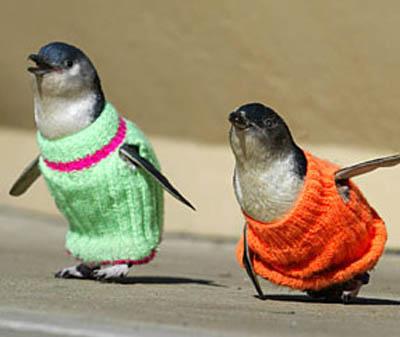
And, if you don't care about that, penguins in sweaters!
I'm not going away
RR
And, if you don't care about that, penguins in sweaters!
I'm not going away
RR
Tuesday, September 29, 2009
Master Classes
If you read much of Rose-coloured last spring, you likely came across notes on my time teaching creative writing to grade 10s and 11s. From this, I learned so much--nothing makes you critical of your own assumptions, limits, and biases like trying to impart them to cranky teens. Every time they questioned me, I questioned myself, and discovered either renewed confidence in my ideas about writing, or renewed eagerness to come up with some better ones.
This spring and summer, I found another way to shake myself out of my habitual thinking and look at things in new ways: judging. When I was asked sit on the jury for Journey Prize 21 I was honoured and terrified--the nominated stories were selected by journal editors as the best they'd published that year! So they were all going to be *pretty* good, and how finely could I discriminate? How could I choose between one very good story and another without simply falling back on my own ingrained prejudices about what I *prefer* in a story, but is not always perfectly coincident with what's *good*.
By reading really carefully and slower than is my wont, by taking notes, by rereading, rereading and rereading. Also, it turns out, by talking. The Journey committee deliberations had some email components, but also a long day in a room with nothing but a pretty view, a lot of delicious food, and stories to discuss. When I sat down with Camilla Gibb and Lee Henderson, I thought that it would be too indimidating to speak up, and yet too irresponsible to the stories not to. So I talked a little, and they were warm and collegial. So I talked some more, and though we didn't always agree, we did always take others' points seriously and honestly, and everyone was willing to return to a story and try to see someone else's reading of it.
And I did too--it was shocking, the way school is shocking. You walk into class having done the readings and formed your opinions, and you aren't even wrong--there's just another layer, another dimension, that the prof (or fellow students) introduce and make you go back and reread and say, "Oh!" I think we were all able to provide these new layers on different stories for each other, and that was what was so amazing and educational--this 360 view on published stories (we do this all the time in workshop, but that's with an eye to the story being rewritten).
The next time I was asked to be a story contest juror, I was much more eager and less trepidacious, and it was another wonderful experience even though, as it turned out, I didn't actually get to do it. I was merrily reading and note-taking for the University of Toronto alumni short story contest when a story I recognized popped up in the second round. As said story progressed to the shortlist, I realized I had to recuse myself from the jury.
By then, though, I had some pretty strong attachments to the stories and was depressed that I'd miss out on what was sure to be a fascinating discussion about who should be a finalist and who should win. I'd also heard through the grapevine that the discussion was to be held at a really good restaurant. So I offered to be a silent audience, mouth opened only to put food in (it really was excellent). Everyone agreed, thank goodness, because this was a whole other education: to listen to the intelligent dialogue and short-story dissections of Andrew Pyper, Lee Gowan and Allyson Latta without the burden of self-consciousness. I had a very solid grasp on the stories, but since I didn't have to be articulating that grasp every minute, I was able to listen ever more deeply to what the other judges thought and felt about the stories. Once again, we were not always in accord, but everyone presented their thoughts with respect for even stories that didn't work for them, and with a willingness to see things from another perspective, should one be offered.
By the time it came around to adjudicating This Magazine's Great Canadian Literary Hunt, short-story side, I felt like I was gaining some expertise (of course, not everyone would think it brilliant time management to agree to sit on three story juries in six months, but honestly, how do people say no to these cool opportunities???) This time it was an e-discussion amongst Dennis Bolen, Kate Sutherland and myself. Again, a vibrant mix of reading styles and expressive styles, and a great openness to very different readings of the same story (although this time, sadly, nothing to eat). Again, a feeling that the other judges had opened up the stories for me, making me read even those I loved in new ways, and giving me ways into stories that hadn't previously spoken to me.
You can see the results of the UofT and This contests in those magazines' last issues of the year, and you can see read the Journey Prize longlist starting next week, when the book is for sale. You can also come see me and Camilla Gibb announce the shortlist for the Journey, tomorrow at 10am at Ben McNally Books, along with a few others of the Writers' Trust Awards shortlists.
Or you can do none of these things and simply trust me on this: people are writing really amazing short stories out there, and they don't seem likely to run out of ways of surprising us with the form anytime soon. And people are thinking about short stories out here, too, and we don't seem likely to be run out of ways of being surprised, either.
All the lies in the book
RR
This spring and summer, I found another way to shake myself out of my habitual thinking and look at things in new ways: judging. When I was asked sit on the jury for Journey Prize 21 I was honoured and terrified--the nominated stories were selected by journal editors as the best they'd published that year! So they were all going to be *pretty* good, and how finely could I discriminate? How could I choose between one very good story and another without simply falling back on my own ingrained prejudices about what I *prefer* in a story, but is not always perfectly coincident with what's *good*.
By reading really carefully and slower than is my wont, by taking notes, by rereading, rereading and rereading. Also, it turns out, by talking. The Journey committee deliberations had some email components, but also a long day in a room with nothing but a pretty view, a lot of delicious food, and stories to discuss. When I sat down with Camilla Gibb and Lee Henderson, I thought that it would be too indimidating to speak up, and yet too irresponsible to the stories not to. So I talked a little, and they were warm and collegial. So I talked some more, and though we didn't always agree, we did always take others' points seriously and honestly, and everyone was willing to return to a story and try to see someone else's reading of it.
And I did too--it was shocking, the way school is shocking. You walk into class having done the readings and formed your opinions, and you aren't even wrong--there's just another layer, another dimension, that the prof (or fellow students) introduce and make you go back and reread and say, "Oh!" I think we were all able to provide these new layers on different stories for each other, and that was what was so amazing and educational--this 360 view on published stories (we do this all the time in workshop, but that's with an eye to the story being rewritten).
The next time I was asked to be a story contest juror, I was much more eager and less trepidacious, and it was another wonderful experience even though, as it turned out, I didn't actually get to do it. I was merrily reading and note-taking for the University of Toronto alumni short story contest when a story I recognized popped up in the second round. As said story progressed to the shortlist, I realized I had to recuse myself from the jury.
By then, though, I had some pretty strong attachments to the stories and was depressed that I'd miss out on what was sure to be a fascinating discussion about who should be a finalist and who should win. I'd also heard through the grapevine that the discussion was to be held at a really good restaurant. So I offered to be a silent audience, mouth opened only to put food in (it really was excellent). Everyone agreed, thank goodness, because this was a whole other education: to listen to the intelligent dialogue and short-story dissections of Andrew Pyper, Lee Gowan and Allyson Latta without the burden of self-consciousness. I had a very solid grasp on the stories, but since I didn't have to be articulating that grasp every minute, I was able to listen ever more deeply to what the other judges thought and felt about the stories. Once again, we were not always in accord, but everyone presented their thoughts with respect for even stories that didn't work for them, and with a willingness to see things from another perspective, should one be offered.
By the time it came around to adjudicating This Magazine's Great Canadian Literary Hunt, short-story side, I felt like I was gaining some expertise (of course, not everyone would think it brilliant time management to agree to sit on three story juries in six months, but honestly, how do people say no to these cool opportunities???) This time it was an e-discussion amongst Dennis Bolen, Kate Sutherland and myself. Again, a vibrant mix of reading styles and expressive styles, and a great openness to very different readings of the same story (although this time, sadly, nothing to eat). Again, a feeling that the other judges had opened up the stories for me, making me read even those I loved in new ways, and giving me ways into stories that hadn't previously spoken to me.
You can see the results of the UofT and This contests in those magazines' last issues of the year, and you can see read the Journey Prize longlist starting next week, when the book is for sale. You can also come see me and Camilla Gibb announce the shortlist for the Journey, tomorrow at 10am at Ben McNally Books, along with a few others of the Writers' Trust Awards shortlists.
Or you can do none of these things and simply trust me on this: people are writing really amazing short stories out there, and they don't seem likely to run out of ways of surprising us with the form anytime soon. And people are thinking about short stories out here, too, and we don't seem likely to be run out of ways of being surprised, either.
All the lies in the book
RR
Tuesday, September 8, 2009
Rose-coloured Reviews Sherwood Anderson's "The Egg"
Sherwood Anderson's short story The Egg (1920) is the story of a poor farmhand slowly driven mad by his attempts to "get up in the world." A few months ago, I read Anderson's first collection, Winesburg, Ohio (that Wikipedia link freakishly calls the book a novel, apparently because there is a reoccuring character in most of the stories. Wikis can't be perfect, I guess) That book is also about small-town and rural folks, mainly struggling with themselves and their lives within those contexts, and not often coming out very happy.
"Winesburg" is a wonderful book, with some rather penetrating insight into human beings, especially for 90-year-old insight. But that book takes itself very very seriously, and the moral intensity of it all sometimes becomes a bit grim, especially if a reader doesn't quite buy into every situation and even finds a few a bit hackneyed (but oh goodness, not most--try the four-part "Godliness" for a little bit of deeply original and heartfelt misery).
"The Egg," on the other hand, is from Anderson's second collection, *The Triumph of the Egg* (the original title of this story). Though released only two years later, *The Egg* is different from anything in the prior book: it is wrist-slittingly funny.
The piece narrated by a young boy, but largely about his father. The father was as a bachelor a happy farmhand, but once he married and had his only son, his wife convinced him to try to "get up in the world," for the sake of the boy.
Their first attempt at wealth is a chicken farm, in which they invest 10 years and untold toil and money, and which is a desparate failure. The sad spectacle of it is described with such perfect black humour that I'm actually worried for your sake that you won't go follow the link and read the story. So I quote at length:
"Most philosophers must have been raised on chicken farms. One hopes for so much from a chicken and is so dreadfully disillusioned. Small chickens, just setting out on the journey of life, look so bright and alert and they are in fact so dreadfully stupid. They are so much like people they mix one up in one's judgments of life. If disease does not kill them they wait until your expectations are thoroughly aroused and then walk under the wheels of a wagon--to go squashed and dead back to their maker. Vermin infest their youth, and fortunes must be spent for curative powders. In later life I have seen how a literature has been built up on the subject of fortunes to be made out of the raising of chickens. It is intended to be read by the gods who have just eaten of the tree of the knowledge of good and evil. It is a hopeful literature and declares that much may be done by simple ambitious people who own a few hens. Do not be led astray by it. It was not written for you."
You see what I mean? Hilarious, but in the end, the humour is not distancing--this is a quite intimate story about the death of hope, even if the faultiness of that hope is often maligned. The son cares for the father's suffering, and we feel both the care and the suffering.
After the farm, the mother (whom some might call the villain of this story) decides that they ought run a restaurant by the train depot, and that that restaurant ought stay open all night. It is in the late and lonely nights in the restaurant that the father's ambition runs completely afield of reality. He has brought from the farm a selection of glass jars in which he has preserved deformed chicks from his flock. He displays them at the restaurant as a form of entertainment, and eventually ends up deciding to expand upon this by becoming part restauranteur, part entertainer, with repartee and some tricks related to...eggs.
The narrator does not see his father's most dramatic unravelling, as it occurred in the middle of the night with only one customer present, with the son still a child, upstairs and asleep. And yet, "For some unexplainable reason I know the story as well as though I had been a witness to my father's discomfiture. One in time gets to know many unexplainable things." So this miserable scene is the relating of the one patron, of course, and also of town gossip in general, but also in part the narrator's own creation, the logic and coherence he has given to his father's breakdown.
I got this story recommendation from my online short story discussion group, the Fiction Files, and they are also mulling over what exactly the egg represents in the piece. Me, I wonder if the egg is the curse of possibilities--like the oyster that might be a pearl when opened, but most likely isn't. In the first paragraph of the story, the narrator alludes to his father's single days of good cheer and calm, and adds, "He had at that time no notion of trying to rise in the world." The narrator has made himself a story out of scraps and gossip, most likely not perfectly accurate and definitely distressing, but the story he has made is something he can live with. His father, unable to create things for himself, was reliant on fate and nature and other people to create things for him, and when none of those will cooperate, it wrecks him. I wonder if Anderson's point has something to do with valuing life as it is or as we make it, and not putting too much stock in possibilities not yet hatched.
What are you thinking? I'll give you 3 guesses
RR
"Winesburg" is a wonderful book, with some rather penetrating insight into human beings, especially for 90-year-old insight. But that book takes itself very very seriously, and the moral intensity of it all sometimes becomes a bit grim, especially if a reader doesn't quite buy into every situation and even finds a few a bit hackneyed (but oh goodness, not most--try the four-part "Godliness" for a little bit of deeply original and heartfelt misery).
"The Egg," on the other hand, is from Anderson's second collection, *The Triumph of the Egg* (the original title of this story). Though released only two years later, *The Egg* is different from anything in the prior book: it is wrist-slittingly funny.
The piece narrated by a young boy, but largely about his father. The father was as a bachelor a happy farmhand, but once he married and had his only son, his wife convinced him to try to "get up in the world," for the sake of the boy.
Their first attempt at wealth is a chicken farm, in which they invest 10 years and untold toil and money, and which is a desparate failure. The sad spectacle of it is described with such perfect black humour that I'm actually worried for your sake that you won't go follow the link and read the story. So I quote at length:
"Most philosophers must have been raised on chicken farms. One hopes for so much from a chicken and is so dreadfully disillusioned. Small chickens, just setting out on the journey of life, look so bright and alert and they are in fact so dreadfully stupid. They are so much like people they mix one up in one's judgments of life. If disease does not kill them they wait until your expectations are thoroughly aroused and then walk under the wheels of a wagon--to go squashed and dead back to their maker. Vermin infest their youth, and fortunes must be spent for curative powders. In later life I have seen how a literature has been built up on the subject of fortunes to be made out of the raising of chickens. It is intended to be read by the gods who have just eaten of the tree of the knowledge of good and evil. It is a hopeful literature and declares that much may be done by simple ambitious people who own a few hens. Do not be led astray by it. It was not written for you."
You see what I mean? Hilarious, but in the end, the humour is not distancing--this is a quite intimate story about the death of hope, even if the faultiness of that hope is often maligned. The son cares for the father's suffering, and we feel both the care and the suffering.
After the farm, the mother (whom some might call the villain of this story) decides that they ought run a restaurant by the train depot, and that that restaurant ought stay open all night. It is in the late and lonely nights in the restaurant that the father's ambition runs completely afield of reality. He has brought from the farm a selection of glass jars in which he has preserved deformed chicks from his flock. He displays them at the restaurant as a form of entertainment, and eventually ends up deciding to expand upon this by becoming part restauranteur, part entertainer, with repartee and some tricks related to...eggs.
The narrator does not see his father's most dramatic unravelling, as it occurred in the middle of the night with only one customer present, with the son still a child, upstairs and asleep. And yet, "For some unexplainable reason I know the story as well as though I had been a witness to my father's discomfiture. One in time gets to know many unexplainable things." So this miserable scene is the relating of the one patron, of course, and also of town gossip in general, but also in part the narrator's own creation, the logic and coherence he has given to his father's breakdown.
I got this story recommendation from my online short story discussion group, the Fiction Files, and they are also mulling over what exactly the egg represents in the piece. Me, I wonder if the egg is the curse of possibilities--like the oyster that might be a pearl when opened, but most likely isn't. In the first paragraph of the story, the narrator alludes to his father's single days of good cheer and calm, and adds, "He had at that time no notion of trying to rise in the world." The narrator has made himself a story out of scraps and gossip, most likely not perfectly accurate and definitely distressing, but the story he has made is something he can live with. His father, unable to create things for himself, was reliant on fate and nature and other people to create things for him, and when none of those will cooperate, it wrecks him. I wonder if Anderson's point has something to do with valuing life as it is or as we make it, and not putting too much stock in possibilities not yet hatched.
What are you thinking? I'll give you 3 guesses
RR
Monday, August 24, 2009
Reads
I would never tell you what to do, but if you were looking for something to read and you happened to *ask* me, I might suggest:
--Sherman Alexie's wonderful new story, War Dances is worth reading just for the crisp dialogue, just for the laconic generosity Alexie extends to his characters, just for the long prose-poem/text experient/amazing section "Exit Interview for My Father." Taken in total, this story blew me away.
--Dave Fiore's new fiction blog, Montreal Fiores's slogan is "putting the character in local character." For those of us who haven't been local in a while, or even at all, these stories and scenes put you there in a detailed, pigeons and cigarette butts way that's so true it's occasionally alarming.
--As ever, the whole of the current issue of The New Quarterly is worth your concentrated attention. Particularly "Impetus for a Sketch" and "All We Will Ever Be," two particularly striking stories out of an issue full of strong strong fiction. The latter is by the 2008/9 Metcalf-Rooke Award-winner, Amy Jones, by the way; so the torch has been passed and it looks like the flame is burning bright.
--But *Once* is still around, and the first story from the collection, "ContEd," has received a thoughtful review at That Shakespearian Rag. In the course of this year, I've learned that almost every single story in the book is someone's favourite, but "ContEd" sure does come up a lot.
There, I'm glad I got all that off my chest. Happy reading!
Summer to winter
RR
--Sherman Alexie's wonderful new story, War Dances is worth reading just for the crisp dialogue, just for the laconic generosity Alexie extends to his characters, just for the long prose-poem/text experient/amazing section "Exit Interview for My Father." Taken in total, this story blew me away.
--Dave Fiore's new fiction blog, Montreal Fiores's slogan is "putting the character in local character." For those of us who haven't been local in a while, or even at all, these stories and scenes put you there in a detailed, pigeons and cigarette butts way that's so true it's occasionally alarming.
--As ever, the whole of the current issue of The New Quarterly is worth your concentrated attention. Particularly "Impetus for a Sketch" and "All We Will Ever Be," two particularly striking stories out of an issue full of strong strong fiction. The latter is by the 2008/9 Metcalf-Rooke Award-winner, Amy Jones, by the way; so the torch has been passed and it looks like the flame is burning bright.
--But *Once* is still around, and the first story from the collection, "ContEd," has received a thoughtful review at That Shakespearian Rag. In the course of this year, I've learned that almost every single story in the book is someone's favourite, but "ContEd" sure does come up a lot.
There, I'm glad I got all that off my chest. Happy reading!
Summer to winter
RR
Thursday, August 20, 2009
Variousky
1) In case you were in suspense following yesterday's panic post, the reading last night went fine, the other readers were fab, as were the friends and food (all-day breakfast very soothing when in a state of freak-out, I discovered). My big fear in reading an unpublished and thus unfixed story is that I would try to fiddle with it, ie., edit, while onstage, and render myself incoherent. But I managed to contain myself, stick to the script and read a half of a brand-new story--yay!! And I think it went well, as confirmed by several persons who are, ok, my friends and brother, but are also honest enough to be trusted.
2) How can we be 20 days into the month and me just reporting to you on That Shakespearian Rag's 31 Days of Short Stories program. It's a good, occasionally critical, introduction to a wide range of stories, and also just great to see stories get this much attention.
3) More on stories: last fall, Nigel Beale did an audio interview with me about what makes a good short story. The interview touched on a lot of points from Flannery O'Connor's views on stories, good company to be in, and riff off. Nigel then did a couple more interviews in similar formats, with Nam Le and Anne Enright, also extremely good company, Highlights from all three are now available in text form in Cha, an Asian literary journal.
4) While I was writing this post, the sky turned black, the wind began to rip leaves from the tree outside my window, thunder rattled and the sky downpoured. An outstanding show--I hope you weren't outside.
There's man holding a megaphone / it must have been the voice of gad
RR
2) How can we be 20 days into the month and me just reporting to you on That Shakespearian Rag's 31 Days of Short Stories program. It's a good, occasionally critical, introduction to a wide range of stories, and also just great to see stories get this much attention.
3) More on stories: last fall, Nigel Beale did an audio interview with me about what makes a good short story. The interview touched on a lot of points from Flannery O'Connor's views on stories, good company to be in, and riff off. Nigel then did a couple more interviews in similar formats, with Nam Le and Anne Enright, also extremely good company, Highlights from all three are now available in text form in Cha, an Asian literary journal.
4) While I was writing this post, the sky turned black, the wind began to rip leaves from the tree outside my window, thunder rattled and the sky downpoured. An outstanding show--I hope you weren't outside.
There's man holding a megaphone / it must have been the voice of gad
RR
Sunday, July 19, 2009
An honour and a privilege
I have ever maintained that the short story is thriving, as challenging, fantastic, funny, depressing, thrilling, shocking, entertaining and inspiring stories continue to be produced in this country at a fantastic rate. I read frequently and vigorously--journals and collections and online stuff--and still there's a million things about this tricksy form that I'm trying to understand.
This spring and summer have afforded me some marvelous opportunities to try to learn this craft. The first was teaching grades 10 and 11 to write short stories. Anytime you want to call everything you think you know into question, just try telling it teenagers. Even before the kids started their questions, the act of putting together my thoughts and beliefs about how something ought to work in a story showed me a lot of my limitations, and opened up doors I never knew existed. Of course I want to think that my teaching served the cause of the short story by showing kids how fun it is to try to write them, and how much can be gained by reading them. In addition to that, though, I do think that my own contributions to the genre will be shaped by what I learned from teaching.
The other thing I've been up to lately is acting as a judge for the Journey Prize 21. Obviously, it was a huge honour to be asked to take on this role, but also a huge privilege to get to immerse myself in some of the best work done in the form this year in Canada, and to then to discuss that work deeply with my inspiring fellow judges, Lee Henderson and Camilla Gibb. This was, once again, an opportunity to interrogate what I think of as a "good short story," why I think that, and how that might be limiting.
I plan to write more about this process around the book's release (October 6; the winner will be announced at the Writers' Trust Awards in November). This little post is just to say that I hope you are as excited about the upcoming anthology as I am--it's full of wonderful, challenging, weird, etc. stories that inspired us, and might inspire you, too. And also to say that I think I'm a lot smarter than I was six months ago.
Our still lives posed / like a bowl of oranges
RR
This spring and summer have afforded me some marvelous opportunities to try to learn this craft. The first was teaching grades 10 and 11 to write short stories. Anytime you want to call everything you think you know into question, just try telling it teenagers. Even before the kids started their questions, the act of putting together my thoughts and beliefs about how something ought to work in a story showed me a lot of my limitations, and opened up doors I never knew existed. Of course I want to think that my teaching served the cause of the short story by showing kids how fun it is to try to write them, and how much can be gained by reading them. In addition to that, though, I do think that my own contributions to the genre will be shaped by what I learned from teaching.
The other thing I've been up to lately is acting as a judge for the Journey Prize 21. Obviously, it was a huge honour to be asked to take on this role, but also a huge privilege to get to immerse myself in some of the best work done in the form this year in Canada, and to then to discuss that work deeply with my inspiring fellow judges, Lee Henderson and Camilla Gibb. This was, once again, an opportunity to interrogate what I think of as a "good short story," why I think that, and how that might be limiting.
I plan to write more about this process around the book's release (October 6; the winner will be announced at the Writers' Trust Awards in November). This little post is just to say that I hope you are as excited about the upcoming anthology as I am--it's full of wonderful, challenging, weird, etc. stories that inspired us, and might inspire you, too. And also to say that I think I'm a lot smarter than I was six months ago.
Our still lives posed / like a bowl of oranges
RR
Thursday, June 18, 2009
Rose-coloured reviews *From the Fifteenth District* by Mavis Gallant
Back before I realized the advantages of reading anthologies (in case you don't want to read the whole post, in brief: taking a chance on new authors who you haven't heard of/didn't know you'd like, hearing the chimes and discordancies between different writers, seeing vastly different takes on similar themes), I almost exclusively read single-author short story collections. In my naivete, I believed in doing this, I was seeing the stories the way the author wanted them. Of course a lot of the time the author is fine with the stories in half a dozen forms: in journals and anthologies and on the internet, later in a collected or selection, as well as that one slim book. Nevertheless, there is something to be said for appreciating a writer's gift over a longer span, even their gift is for short pieces, arranged in the order they wanted. I had read two of the nine pieces in From the Fifteenth District elsewhere (where? probably anthologies, although I don't really recall). I knew that I had loved "The Moslem Wife" and "The Latehomecomer", and I loved them here in the collection, too, but I felt a different affection seeing them working in concert with their fellows. *Fifteenth* is a book about Europe in the middle 50 years of the last century, about nationalism and nationality, very often about war, the indignities of being a woman, or a Jew, or a child, or simply alive.
These themes sound terribly heavy and imposing, but in fact such is Gallant's subtly that you sometimes only realize two stories on what other layers were going on while you read blithely away. "The Moslem Wife" is a story about Netta's devotion to Jack, their marriage and its tensions, and what happened after that, when the war came to their part of France. That romance and the intervention of history absorbed me entirely on first reading, and mainly on second, but I did notice that Netta and Jack were both Brits working and living in the south of France, not quite of the place but hardly of England, either. I noticed this because I had just read "The Four Seasons", the first story in the book, about a young girl who goes to work for an American family living it Italy. The girl is Italian, but from another part so she doesn't understand the local dialect, nor the English of her employers. Gradually she learns the latter, but remains so aloof from them she denies that she understands a word they say to her. Just as "Poor Netta, who saw herself as profoundly English, spread consternation by being suddenly foreign..."
The characters in these stories are French in Holland, Germans in France, Americans in Italy and Bulgarians in Scotland. They are the diaspora and the left behind. Is that the theme of this book, then--dispersal, foreignness, home and lack-of-home? Maybe...as usual, what I like best is stories that are examples and examinations of how people are, and I think *Fifteenth* is such a collection, under slightly narrower terms. How people are out of context, under duress, without the confidence-making banality of being like everyone else.
One of Gallant's considerable achievements is that these stories are not only as tough and intense and wrenching as life is, they are also as funny, as ironic, as sardonic (although, I must say, rarely as silly--one thing Gallant doesn't bother much with is lightness). One of the back-cover blurbs made me flinch as I read it on the bus (you mean you don't read all that stuff? don't you know how the intern slaved over it?): "Gallant's fiction is so finely observed and so forbearing in the face of the shortcomings we ascribe to human nature that the reader might easily come away with the impression that these stories are narrated by God." That's from Mirabella, a now-defunct "women's magazine" that one would not necessarily zoom to for serious literary reviews. This seemed at first a giddy overstatement.
But when I got back into the stories, the comment actually started to make good sense to me. Because what Gallant is very very good at is omniscient narrators, which even university professors do describe as "the God POV." Her narrators speak with the gentle, slightly distanced affection of a parent listening to a child describe a nightmare. She writes with a long view of history (as I say, the stories are mainly about the time before and after WWII, and the book was published in 1979, when much had been discovered about small and large culpabilities and heroism in Europe). There is always that awareness in her writing of how minor human foibles link up with global concerns...and how that's ok.
Forbearing is exactly right for the tone in the line about Netta above, I think--the narrator genuinely pities her, while eliding none of her pretension and "gas". In some of the stories, a character gets to take on this long, quiet, accepting view. My favourite in the collection is "Baum, Gabriel, 1935-( )", the story of an actor living in Paris who is the only surviving member of a family destroyed by the Holocaust. No, it isn't light, but nor is it a bludgeon. I have a hard time reading about the Holocaust, and I often find writers can't get beyond descriptions of intense physical and emotional suffering...nor should they, I guess...it's important. Gallant, however, finds much else to unfold in Gabriel's loneliness, his disconnection from the world around him, his faint bewilderment by it. I think this account of the main character's reading of the newspaper is very funny, and yet, it is designed to do much more than amuse:
"Some journalists tried to interest Gabriel in Brittany, where there was an artichoke glut; others hinted that the new ecumenicity beginning to seep out of Rome was really an attack on French institutions. Gabriel doubted this. Looking for news about his pension, he learned about the Western European consumer society and the moral wounds that were being inflicted on France through full employment. Between jobs, he read articles about people who said they had been made unhappy by paper napkins and washing machines."
Is this satire on the news? Only the most gentle sort; Gabriel lacks the energy or inclination to mock. He is beyond it, and while *that* is his tragedy, it is also his strength, what allows him to survive these and greater ironies of life going on and lunch getting eating after one of the greatest cruelties of modern history.
These are small stories, and Gallant leaves you free to read them that way; each piece is self-contained in it's detail and emotion, but the more history and feeling you bring to the pieces (and she supplies it small ways, too), the bigger they get. This is a writer who has found a way to keep her gaze firmly on individuals in all their simple sadness, and yet let that reflect all the wild complexity of the worlds they inhabit.
I wonder where you are / curious
RR
These themes sound terribly heavy and imposing, but in fact such is Gallant's subtly that you sometimes only realize two stories on what other layers were going on while you read blithely away. "The Moslem Wife" is a story about Netta's devotion to Jack, their marriage and its tensions, and what happened after that, when the war came to their part of France. That romance and the intervention of history absorbed me entirely on first reading, and mainly on second, but I did notice that Netta and Jack were both Brits working and living in the south of France, not quite of the place but hardly of England, either. I noticed this because I had just read "The Four Seasons", the first story in the book, about a young girl who goes to work for an American family living it Italy. The girl is Italian, but from another part so she doesn't understand the local dialect, nor the English of her employers. Gradually she learns the latter, but remains so aloof from them she denies that she understands a word they say to her. Just as "Poor Netta, who saw herself as profoundly English, spread consternation by being suddenly foreign..."
The characters in these stories are French in Holland, Germans in France, Americans in Italy and Bulgarians in Scotland. They are the diaspora and the left behind. Is that the theme of this book, then--dispersal, foreignness, home and lack-of-home? Maybe...as usual, what I like best is stories that are examples and examinations of how people are, and I think *Fifteenth* is such a collection, under slightly narrower terms. How people are out of context, under duress, without the confidence-making banality of being like everyone else.
One of Gallant's considerable achievements is that these stories are not only as tough and intense and wrenching as life is, they are also as funny, as ironic, as sardonic (although, I must say, rarely as silly--one thing Gallant doesn't bother much with is lightness). One of the back-cover blurbs made me flinch as I read it on the bus (you mean you don't read all that stuff? don't you know how the intern slaved over it?): "Gallant's fiction is so finely observed and so forbearing in the face of the shortcomings we ascribe to human nature that the reader might easily come away with the impression that these stories are narrated by God." That's from Mirabella, a now-defunct "women's magazine" that one would not necessarily zoom to for serious literary reviews. This seemed at first a giddy overstatement.
But when I got back into the stories, the comment actually started to make good sense to me. Because what Gallant is very very good at is omniscient narrators, which even university professors do describe as "the God POV." Her narrators speak with the gentle, slightly distanced affection of a parent listening to a child describe a nightmare. She writes with a long view of history (as I say, the stories are mainly about the time before and after WWII, and the book was published in 1979, when much had been discovered about small and large culpabilities and heroism in Europe). There is always that awareness in her writing of how minor human foibles link up with global concerns...and how that's ok.
Forbearing is exactly right for the tone in the line about Netta above, I think--the narrator genuinely pities her, while eliding none of her pretension and "gas". In some of the stories, a character gets to take on this long, quiet, accepting view. My favourite in the collection is "Baum, Gabriel, 1935-( )", the story of an actor living in Paris who is the only surviving member of a family destroyed by the Holocaust. No, it isn't light, but nor is it a bludgeon. I have a hard time reading about the Holocaust, and I often find writers can't get beyond descriptions of intense physical and emotional suffering...nor should they, I guess...it's important. Gallant, however, finds much else to unfold in Gabriel's loneliness, his disconnection from the world around him, his faint bewilderment by it. I think this account of the main character's reading of the newspaper is very funny, and yet, it is designed to do much more than amuse:
"Some journalists tried to interest Gabriel in Brittany, where there was an artichoke glut; others hinted that the new ecumenicity beginning to seep out of Rome was really an attack on French institutions. Gabriel doubted this. Looking for news about his pension, he learned about the Western European consumer society and the moral wounds that were being inflicted on France through full employment. Between jobs, he read articles about people who said they had been made unhappy by paper napkins and washing machines."
Is this satire on the news? Only the most gentle sort; Gabriel lacks the energy or inclination to mock. He is beyond it, and while *that* is his tragedy, it is also his strength, what allows him to survive these and greater ironies of life going on and lunch getting eating after one of the greatest cruelties of modern history.
These are small stories, and Gallant leaves you free to read them that way; each piece is self-contained in it's detail and emotion, but the more history and feeling you bring to the pieces (and she supplies it small ways, too), the bigger they get. This is a writer who has found a way to keep her gaze firmly on individuals in all their simple sadness, and yet let that reflect all the wild complexity of the worlds they inhabit.
I wonder where you are / curious
RR
Sunday, June 7, 2009
Blogging the NMAs
Right off the bat, I'll tell you that my short story "Linh Lai," originally publishing in The New Quarterly did not win the National Magazine Award for which it was short-listed. But Friday night's shindig was still an amazing good time, not least because I got to sit with the TNQ crew, and chat with assorted other cool folks.
 Rosalynn Tyo (left) and Katia Grubisic were nominated for their work on TNQ's Montreal Issue (they didn't win, either, I'm afraid--boo! it's a fantastic issue!)
 The TNQ table, from left: Chair of the Board Kathy Berrill, editor-in-chief Kim Jernigan, Managing Ed Rosalynn, me giggling with Katia.
 My and my glamourous friend Corinna vanGerwen, nominated for editorial work in Style at Home.
Other highlights include the food: chocolate fountain, smoked salmon wraps, spicy popcorn (not in that order, but in that order in my heart!) The crazy cool opening video collage of magazines--I wonder if that will eventually be available somewhere... Also, The Carlu where it was held was really glam (watch that link, though; borderline porny music plays when you open it!)
Although I can't say I was 100% thrilled not to win, the fiction winner Andrew Tibbetts brought the percentage up into the 90s with his acceptance speech, which ended with "and thank you to transsexual sex workers, just because." He rightly received an additional award, for best acceptance speech. Way to represent, Mr. Tibbetts!
Find the river
RR
 Rosalynn Tyo (left) and Katia Grubisic were nominated for their work on TNQ's Montreal Issue (they didn't win, either, I'm afraid--boo! it's a fantastic issue!)
 The TNQ table, from left: Chair of the Board Kathy Berrill, editor-in-chief Kim Jernigan, Managing Ed Rosalynn, me giggling with Katia.
 My and my glamourous friend Corinna vanGerwen, nominated for editorial work in Style at Home.
Although I can't say I was 100% thrilled not to win, the fiction winner Andrew Tibbetts brought the percentage up into the 90s with his acceptance speech, which ended with "and thank you to transsexual sex workers, just because." He rightly received an additional award, for best acceptance speech. Way to represent, Mr. Tibbetts!
Find the river
RR
Subscribe to:
Posts (Atom)